 The United Religious, Military and Masonic Orders of the Temple and of St John of Jerusalem, Palestine, Rhodes and Malta in England and Wales and Provinces Overseas
Province of Kent
 Weapons and PPE for a Knights Templar
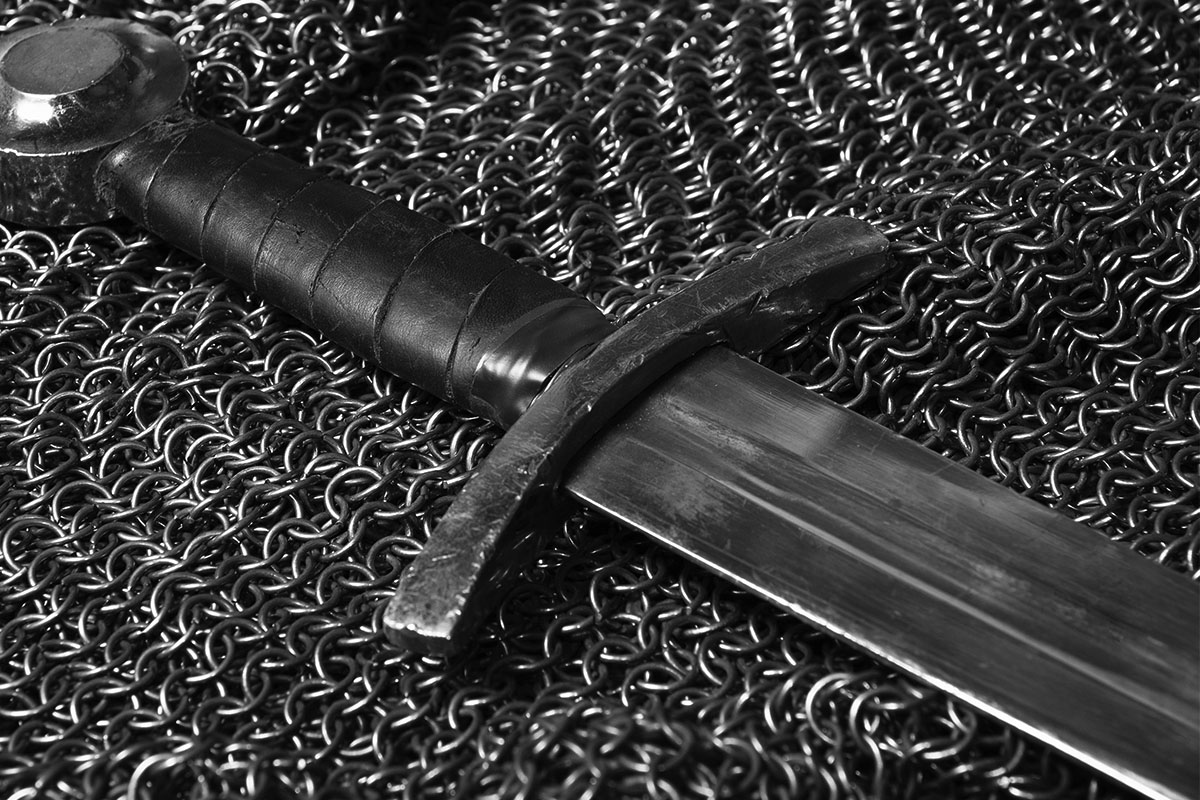 Knight Templar: Swords
 The sword was the primary weapon carried by the Knights. Over the years it evolved as manufacture, fashion and changes in conflict demanded.
My own Templar sword, the inscription reads: - "Nothing for us Lord, Nothing for us but the Glory of thine Name".
- Overall length: 101.6cm
- Blade length: 82.5cm
- Weight: 1.65kg
Knight Templar: Bow and Arrow
 The bow and arrow was primarily used to kill from a safe distance with rapid fire and with the force to penetrate skin and armour. Not used by Knights when in a mounted battle, but when on foot undertaking or defending a siege.
Knight Templar: The Mace
 The Mace is a type of club, two to three feet in length with a wooden shaft surmounted with a ball of iron, smooth, spiked or with flanges. Its purpose was to crush bones and penetrate armour.
Preferred by some Knightly Clerics who had sworn not to carry an edged weapon.
Knight Templar: The Lance

The Lance, only used by Knights when mounted, was a made of sturdy yet flexible ash wood, with a length of between nine and fourteen feet. Very successful in the initial charge, but became unwieldly in close combat. Usually tipped with an iron point it could penetrate most forms of armour when properly used.
Knight Templar: Battle Axe
 King Richard, the Lion Heart, is reported to have used a Danish Battle Axe at the relief of Jaffa.
It was the Vikings who first converted the humble felling axe from a forester’s tool into the most devastating limb severing weapon.
Knight Templar: Knives and Axes
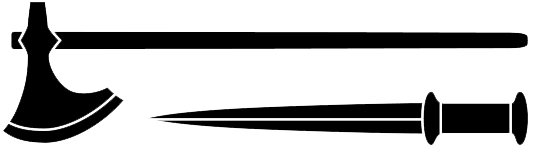 The knife was usually a miniature version of the sword, made to suit the stature of the Knight. The axe had either a long shaft, like a wood cutters axe, with a flaring blade, or a thinner more pointed blade like a modern fire fighters’ axe. Both proved effective when at close quarters.
Knight Templar: The Spear
 The length of the spear was between six to eight feet. The purpose of the spear in combat is to keep your opponent at a distance by thrusting at him.
Spears were used not only against infantry but also against cavalry charges to great effect. The main use of the spear is to pierce armour and shatter bone, killing in one hit.
Crusader Helmets: Men at Arms
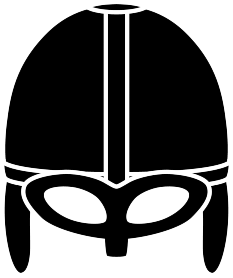 The Crusader Men at arms used a helmet called a Kettle Helm. The wide brim design gave protection against sword strikes from the enemy when facing a cavalry charge. During sieges it also gave protection against Greek fire and missiles raining from above.
Crusader Helmets: Knights
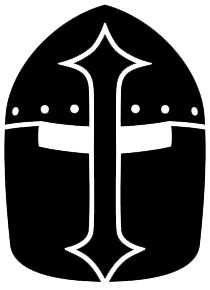 The Crusader Knights used a helmet called a Great Helm. It gave full head protection but was very heavy and gave very limited vision.
It became very hot inside very quickly, providing very little ventilation. It was therefore often discarded after the initial clashes in the melee of combat.
Crusader Helmets: The Great Helm
The forerunner to the Great Helm was the Cervelliere.It was the primary head protection particularly during the earlier Crusades. Usually worn with a mail coif, some versions added nose guards and other face protection.
It developed into the pointed Bascinet and The Great Helm.
Crusader Gambeson
 The Crusaders used a Gambeson under their Knightly Garb and at times under their chain mail, as a light weight padded lining to protect against piercing weapons such as spears and arrows.
In the heat of the Holy Land these were replaced by cotton shirts, if authorized by the Master.
Crusader Chain Mail
 The Crusaders used a chain mail Haubert under their Knightly Regalia to give some protection against piercing weapons such as lances, spears and arrows.
Very effective against sword and Axe strikes. But it limited quick movement and reactions.
The Crusaders used a chain mail Haubert under their Knightly Regalia to give some protection against piercing weapons such as lances, spears and arrows.
Very effective against sword and Axe strikes. But it limited quick movement and reactions.Knight Templar: The Trebuchet
The trebuchet and similar 'artillery' were developed by the Romans. It was first used during the crusades by the Muslims firing stones of flammable projectiles against and over city walls to bring them down. In some instances, they were used to fire dead plague victims or the body parts of murdered prisoners over city walls.
 Side view of counterweight trebuchet, with a detail of the counterweight release mechanism
< back

